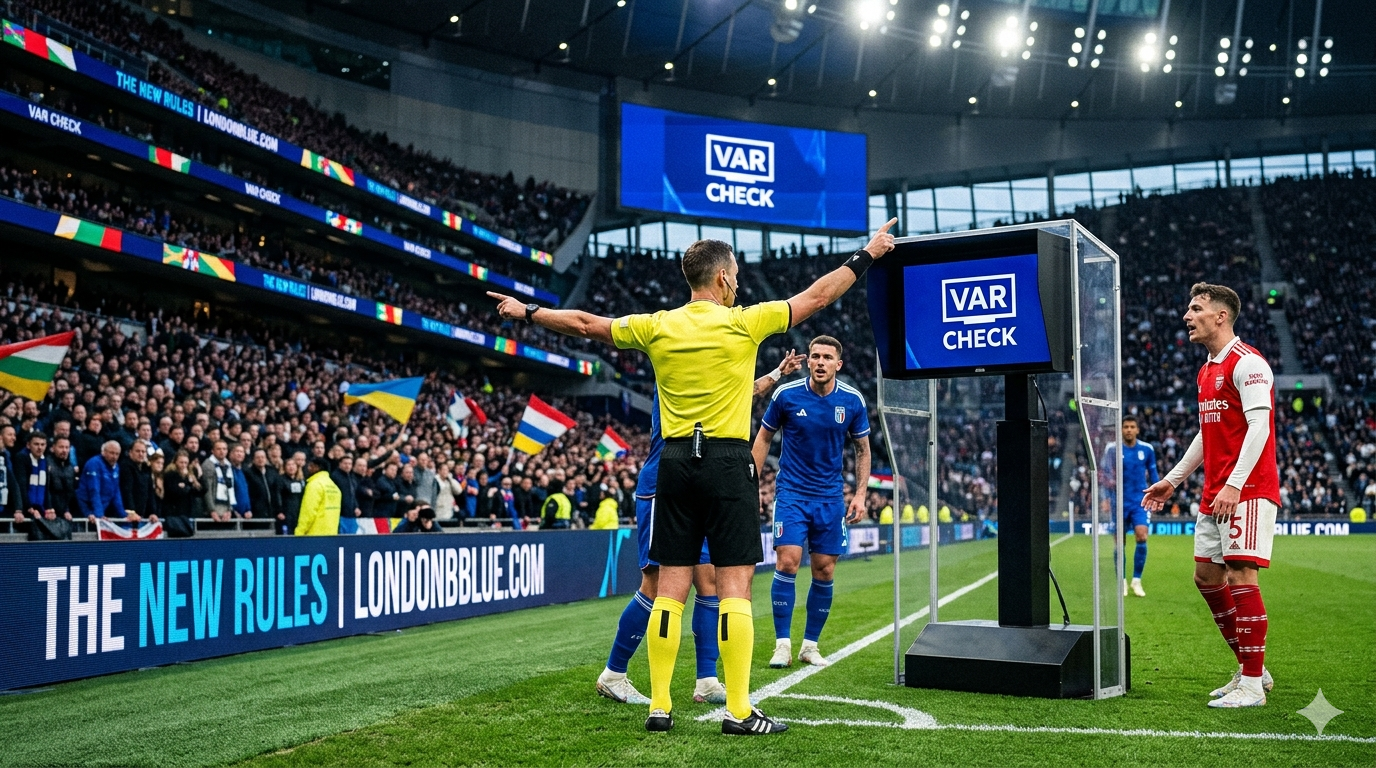

- Football is about to look a whole lot different. Following a flurry of confirmations from IFAB and FIFA, a sweeping set of rule changes has been officially finalized just ahead of the 2026 World Cup.
Whether you think these tweaks will finally kill off agonizing time-wasting or just add a new layer of VAR drama to the international stage, there’s no denying the landscape of the game is shifting.
Before the tournament kicks off, here is the definitive breakdown of the new rules that will change how the beautiful game is played.
1. VAR Gets More Power (Goodbye, Second Yellow Injustices)
For years, fans have screamed at their screens when a player gets a completely unjustified second yellow card and VAR's hands have been tied. No more.
Second Yellow Reviews: VAR can now intervene if a second yellow card is a "clear and obvious" error that results in a sending-off. Note: VAR still cannot review a standard first yellow card.
Mistaken Identity: If the referee books the wrong player, VAR will step in swiftly to ensure the right person takes the fall.
Corner Kick Corrections: VAR can now fix clearly misawarded corner kicks—but only if it can be corrected immediately before the restart. If a team takes a short corner at lightning speed, the decision stands.
The London Blue Take: This is a massive win for fairness. We all remember games turned on their heads by a dreadful second booking. However, expect teams to start taking corners instantly to "lock in" an incorrect decision before the VAR can whisper in the ref’s ear.
2. The War on Time-Wasting: Clocks, Countdowns, and 10-Second Sprints
If you’re a fan of players slowly walking across the entire pitch to be substituted in the 89th minute, look away now. IFAB is coming for the clock-cheats.
The 10-Second Substitution Rule
Players being substituted now have exactly 10 seconds to exit the field from the nearest boundary line. If they take longer, the player coming on is punished by being forced to wait on the sideline for at least one minute (and until the next stoppage in play).
The 5-Second Countdown
Referees will now use a visible, raised-hand 5-second countdown for throw-ins and goal-kicks. The penalties for failing to restart in time are brutal:
Delayed Throw-in: Possession is instantly turned over to the opposition.
Delayed Goal-kick: The opposing team is awarded a corner kick. Yes, you read that correctly. A slow goal-kick could literally cost a team a goal.
3. Clamping Down on "Tactical Timeouts" and On-Pitch Drama
We’ve all seen it: a team is under the cosh, their goalkeeper mysteriously goes down clutching a hamstring, and suddenly the opposing manager is holding a mini-tactical masterclass on the touchline. FIFA is shutting it down.
No More Bench Huddles: When a keeper is being treated, outfield players are strictly banned from gathering around the technical area for tactical talks.
The 1-Minute Injury Mandatory Wait: Outfield players who receive medical treatment on the pitch must stay off the field for at least one minute after play restarts. This naturally excludes concussions, penalty takers, or serious goalkeeper collisions, but it will absolutely stop players from "buying time" with fake cramps.
The Mouth-Covering Red Card: In a massive move for player conduct, any player who covers their mouth with their hand or shirt during an on-pitch confrontation will face a straight red card to curb hidden discriminatory abuse.
The Verdict
These changes are designed to give us more "ball-in-play" time, and honestly, it’s hard to argue with a rule that turns a delayed goal-kick into an opposition corner. Managers at the World Cup will need to drill these protocols into their squads immediately. One lapse in concentration on a throw-in or a slow substitution exit could cost a nation their tournament.
What do you think of these new rules? Are they going to fix the modern game, or is it getting too complicated? Let us know your thoughts in the comments below!